History and Philosophy
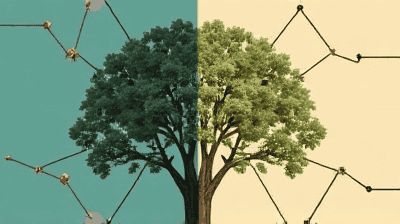
Occam's Razor in the Age of Multiverses: Is Simplicity Still a Virtue in Physics
Occam's Razor in the Age of Multiverses: Is Simplicity Still a Virtue in Physics?

In the realm of scientific inquiry, the principles that govern our understanding of the universe are continually challenged and refined. Among these principles is Occam's Razor, a philosophical axiom attributed to the 14th-century logician and Franciscan friar William of Ockham.

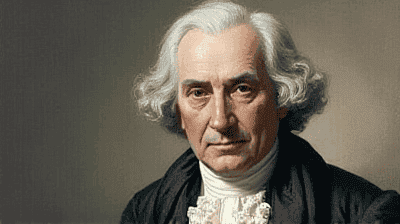
The Rosetta Stone of Physics: How Newton's Principia Mathematica Decoded the Universe

When we think of pivotal moments in the history of science, few can rival the impact of Isaac Newton's "Philosophiæ Naturalis Principia Mathematica," commonly known as the Principia. Published in 1687, this groundbreaking work laid the foundations for classical mechanics and forever altered humanity's understanding of the natural world.

The Fermi Paradox Revisited: New Philosophical Solutions to the Silence of the Universe

The universe is vast, containing billions of galaxies, each with millions or even billions of stars, many of which are likely to have planets capable of supporting life. Given these staggering numbers, the question that emerges is: Where is everybody?

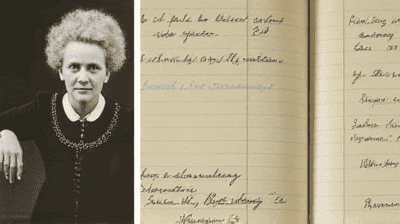
Marie Curie's Notebooks: Still Radioactive a Century Later – The Price of Discovery

Marie Curie is often celebrated as one of the most notable scientific pioneers of the 20th century. Best known for her groundbreaking research on radioactivity—a term she coined—Curie's work laid the foundation for advancements that would transform medicine, energy production, and our understanding of atomic science.

Animal Consciousness: Why Philosophers and Scientists Still Can't Agree

The question of whether animals possess consciousness has captivated philosophers, scientists, and the general public for centuries. While advances in neuroscience and behavioral studies have contributed to our understanding of animal minds, debates regarding the nature, definition, and implications of consciousness remain unresolved.

Darwin's Delay: Why He Waited 20 Years to Publish 'On the Origin of Species'

Charles Darwin's journey to publish "On the Origin of Species" in 1859 marked a significant turning point in the history of science and philosophy. This seminal work introduced the theory of evolution by natural selection, fundamentally changing our understanding of biology and the diversity of life on Earth.

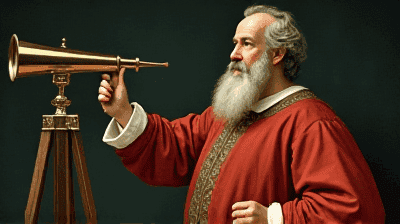
Galileo's Telescope: How One Instrument Sparked the Scientific Revolution

The dawn of the 17th century marked a pivotal moment in human history—the emergence of the Scientific Revolution. This transformative period reshaped humanity's understanding of the cosmos, laying the groundwork for modern science.

The Simulation Argument: Is There Any Way to Prove We're Not Living in a Computer
The Simulation Argument: Is There Any Way to Prove We're Not Living in a Computer?

The idea that we might be living in a computer simulation has gained significant traction in both philosophical discourse and popular culture. With the rise of advanced technology, virtual reality, and artificial intelligence, the notion that our perceived reality could be a sophisticated simulation has transitioned from the realms of science fiction into serious academic consideration.

The Manhattan Project's Moral Dilemma: Science, War, and the Birth of the Atomic Age

The Manhattan Project remains one of the most significant and controversial scientific undertakings in history. This unprecedented effort during World War II led to the development of the atomic bomb, marking a profound shift in global power dynamics and ethical considerations surrounding science and technology.

Pascal's Wager for AI: Should We Assume Superintelligence Will Be Friendly
Pascal's Wager for AI: Should We Assume Superintelligence Will Be Friendly?

The rapid advancement of artificial intelligence (AI) presents both remarkable opportunities and profound risks. As we approach the possibility of superintelligent AI—intelligence that surpasses the best human minds in practically every field—we face critical questions about its nature and implications.

  • 1
  • 2