Social Science
Nature vs. Nurture Revisited: How Epigenetics Is Changing the Debate

The age-old debate of nature versus nurture is one of the most intriguing discussions in the fields of psychology, sociology, and biology. For centuries, researchers and theorists have sought to understand the extent to which genetics (nature) or environment (nurture) shape our behaviors, personalities, and even our health.

The Dunning-Kruger Effect: Why Incompetent People Don't Know They're Incompetent

Have you ever encountered someone who confidently asserts their expertise on a subject, only to find that their understanding is fundamentally flawed? Perhaps they are unable to grasp the intricacies of a topic yet demonstrate an unwavering belief in their abilities.

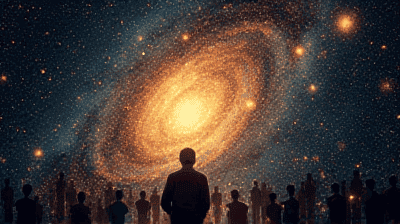
Social Contagion: How Behaviors Spread Through Networks Like Viruses

In today’s interconnected world, it is increasingly clear that our behaviors, thoughts, and feelings can be influenced not only by our immediate environment but also by the people around us.

The Mandela Effect: How False Memories Spread Through Populations

Have you ever been certain of a detail from the past, only to discover that your memory of it is incorrect? Perhaps you vividly remember a line from a film or a historical event, only to find that it unfolded differently than you recall. This phenomenon has a name: the Mandela Effect.

Nudge Theory Explained: How Small Changes Can Massively Influence Decisions

In our daily lives, the choices we make are influenced by a myriad of factors, many of which we may not even be aware of. From the foods we choose to eat, to the way we save for retirement, our decision-making processes are often shaped by subtle cues in our environment.

Cognitive Load Theory: Why Multitasking Is a Myth That Makes You Dumber

In today's fast-paced world, the ability to multitask is often championed as a valuable skill. Many of us pride ourselves on being able to juggle multiple responsibilities at once—answering emails while listening to a podcast, attending a virtual meeting while cooking dinner, or texting a friend while studying for an exam.

Groupthink in the Digital Age: How Social Media Amplifies Bad Decisions

In recent years, the rise of social media has transformed the way we communicate, share information, and make decisions. While these platforms promote connectivity and collaboration, they can also foster negative group dynamics, such as groupthink.

The Bystander Effect Decoded: Why People Don't Help in Emergencies (And How to Change It)

Have you ever witnessed an emergency situation and found yourself hesitating to help? You are not alone. The phenomenon known as the bystander effect explains why individuals often fail to intervene when others are in need.

  • 1
  • 2