Technology Science
Li-Fi vs. Wi-Fi: Can Light-Based Internet Replace Radio Waves
Li-Fi vs. Wi-Fi: Can Light-Based Internet Replace Radio Waves?

In today's digital age, reliable internet connectivity is a necessity. As technology evolves, so do the methods we use to connect to the internet. Among these methods, Wi Fi has become a staple in homes, offices, and public spaces worldwide. However, an emerging technology known as Li Fi, or Light Fidelity, proposes a revolutionary alternative that harnesses light waves instead of radio waves to transmit data.

Robotic Exoskeletons: From Military Use to Helping the Paralyzed Walk Again

The development of robotic exoskeletons represents one of the most fascinating intersections of technology and human capability. Originally conceived for military applications, these wearable machines have evolved significantly, leading to their potential to transform the lives of people with disabilities. Robotic exoskeletons are designed to augment human strength, assist in mobility, and enable physical rehabilitation.

The Future of Manufacturing: How Industrial Robots Are Getting Smarter

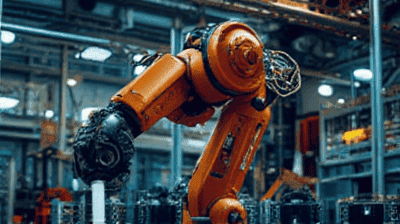
In the realm of modern manufacturing, industrial robots have become essential components on the factory floor, driving efficiency, productivity, and precision. As technology continues to advance at an extraordinary pace, these machines are not only evolving in terms of their capabilities but also becoming remarkably smarter. The integration of artificial intelligence, machine learning, and advanced sensors is revolutionizing the way industrial robots operate, opening doors to a new era in manufacturing.

SpaceX's Starship: How Reusable Rockets Are Changing Space Travel

For decades, the dream of space travel was constrained by the high costs and limitations of traditional launch systems. The advent of reusable rocket technology has revolutionized this landscape, bringing us closer to a future where space is accessible to everyone. At the forefront of this revolution is SpaceX's Starship, a fully reusable spacecraft designed for missions ranging from satellite deployment to interplanetary travel.

Neuromorphic Computing: How Brain-Inspired Chips Could Revolutionize AI

Artificial intelligence is transforming the technological landscape, powering innovations in diverse fields such as healthcare, finance, transportation, and entertainment. Traditionally, most AI systems have relied on conventional computing architectures, primarily utilizing centralized processing units (CPUs) and graphics processing units (GPUs). However, as the demand for more efficient and powerful AI systems grows, researchers and engineers are exploring alternative computing paradigms. One of the most

Self-Healing Electronics: Can Circuits Repair Themselves Like Human Skin
Self-Healing Electronics: Can Circuits Repair Themselves Like Human Skin?

Imagine a world where your smartphone continues to function perfectly even after suffering from minor damages. What if your gadgets could repair themselves automatically, just like human skin heals from cuts and abrasions? This vision is becoming a reality through the development of self-healing electronics. As technology continues to advance at a rapid pace, research in materials science has led to the creation of circuits that can mend themselves after being damaged.

Space Debris Crisis: How We Can Clean Up Thousands of Orbiting Junk

The night sky has always captivated the imagination, serving as a canvas for human exploration and discovery. However, as we have expanded our presence in space, we have also filled it with an increasing amount of debris—leftover parts from rockets, defunct satellites, and fragments from collisions. This situation has evolved into a crisis known as space debris, posing significant risks to active satellites and crewed missions in low Earth orbit (LEO).

Self-Driving Cars: The Sensors, Algorithms, and Challenges of Autonomous Vehicles

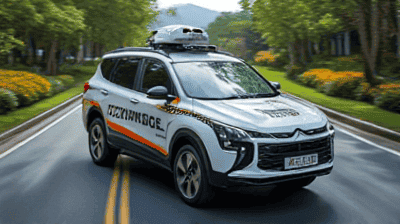
The development of self-driving cars has rapidly evolved from science fiction into a tangible reality. Autonomous vehicles promise to transform how we travel, potentially reducing traffic accidents, alleviating congestion, and reshaping urban landscapes. However, creating cars that can navigate safely and efficiently without human intervention is a complex challenge that involves advanced sensor technology, sophisticated algorithms, and rigorous testing.

Swarm Robotics: How Tiny Robots Collaborate Like Insect Colonies

Swarm robotics is an exciting and rapidly developing field that explores how groups of simple robots can work together to perform complex tasks, much like the intricacies of insect colonies. Inspired by social insects such as ants, bees, and termites, swarm robotics utilizes principles of collective behavior to design systems where numerous robots operate in parallel, sharing information and resources effectively.

Reinforcement Learning: How AI Masters Games Like Chess and Go

Artificial intelligence has achieved remarkable milestones over the past few decades, particularly in the realm of games. Two of the most challenging games that have been conquered by AI are chess and Go. Through techniques such as reinforcement learning, AI has not only learned to play these games at a high level but has also redefined the boundaries of strategic thinking and decision-making.

  • 1
  • 2